
as a project leader for asia-pacific users or those who need korean nodes, this article uses a developer's perspective to systematically explain how to configure the environment and optimize performance after renting a korean vps. the article takes into account practical suggestions at the network, system and application levels to facilitate quick launch and improve stability and response speed.
considerations when choosing a korean vps
when choosing a korean vps, you should evaluate network latency, upstream and downstream bandwidth, computer room location, ip pool quality and compliance requirements. for services to south korea or neighboring countries, priority should be given to the actual route and packet loss rate from the computer room to the target user, to avoid looking only at theoretical bandwidth and ignoring network stability.
basic environment configuration
operating system selection, file system, partition and swap strategy determine system baseline performance. it is recommended to use an lts-like linux distribution, enable ssh key authentication, set the time zone to asia/seoul and synchronize ntp. use ssd for the disk and reasonably divide /var/log and data disk to facilitate later maintenance.
network and bandwidth configuration
perform a link test before configuring public ip, dns resolution, and mtu parameters. enabling ipv6 improves coverage and reduces pressure on ipv4. properly set firewall ports and traffic restrictions, and combine with cdn or reverse proxy when necessary to reduce origin site bandwidth usage and geographical routing jitter.
security hardening
security is a priority in production environments. turn off password login, restrict sudo users, configure fail2ban or similar anti-violence modules, enable selinux/apparmor and automate regular updates. establish offline backup and snapshot strategies to ensure quick rollback in emergencies.
performance optimization strategies
tuning at the kernel and i/o levels can significantly improve throughput. adjust sysctl (network, tcp_fin_timeout, file-max, etc.), properly set swappiness and io scheduler, optimize file descriptor and epoll configuration for high concurrency scenarios, and improve concurrent processing capabilities.
database and cache optimization
database performance is often the bottleneck. adjust the connection pool, cache size and log strategy according to the load, enable slow query logs and optimize indexes. introduce redis or memcached as the cache layer to reduce the frequency of direct database connection and improve response and concurrent hosting.
application and container optimization
use efficient web servers and process managers (such as nginx, gunicorn, pm2) at the application level to enable keep-alive, compression and tls optimization. when deploying containers, pay attention to resource limitations, image reduction, and multi-level caching to speed up startup and deployment.
monitoring and capacity planning
continuous monitoring of cpu, memory, disk io, network latency and application metrics is critical. establish alarm strategies and historical trend analysis for capacity prediction and automatic expansion and contraction decisions. conduct stress testing and fault drills regularly to verify the feasibility of the backup and recovery process.
summary: after renting a korean vps, configuring network, security, systems and applications layer by layer from the above developer perspective, combined with monitoring and capacity planning, can significantly improve service availability and performance. adjust optimization strategies based on actual business scenarios and maintain automated and reproducible deployment processes to reduce operation and maintenance costs.
- Latest articles
- Analysis Of The Changes In The Economic System And Trading Market Of The Magic Baby Japan Server On The Japanese Server
- Why Do E-commerce And Video Platforms Need Japanese Native IP Websites To Ensure A Good Experience?
- Survival Strategies And Differentiated Service Explorations For Small And Medium-sized Vendors In The U.S. Server Hosting Industry
- How To Quickly Raise The Entry-level Salary Tier Of Hong Kong IDC Data Centers Through Certificates And Project Experience
- A Practical Guide To Comparing Malaysian Cloud Server Price Lists For Different Models And Bandwidth Options
- Where To Buy Taiwan Native IPs With Legal And Compliant Buying Guides
- Which Cloud Server In Vietnam Is A Good Case, Sharing Best Practices And Implementation Experiences Across Different Industries
- Gaming Industry Special Edition: Thailand Acceleration Server Rankings And Player Experience Report
- IP Reputation And Blacklist Risk Management When Choosing Hong Kong Multi-IP Server Hosting
- How Cross-border Developers Can Choose A German VPS Hosting Solution That Is Compliant And Supports GDPR
- Popular tags
-

Discuss Various Applications And Practical Cases Of Korean VPS
This article discusses various applications and practical cases of Korean VPS to help readers understand its advantages and effects in different fields. -
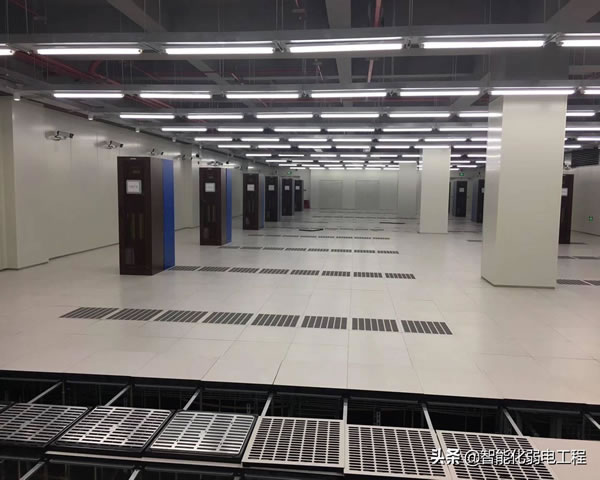
Compare The Advantages, Disadvantages And Risks Of Renting A Korean Cloud Server And Building A Self-built Computer Room In Korea
professionally compares the advantages, disadvantages and risks of korean cloud server rental and self-built computer rooms, and gives practical suggestions from the dimensions of cost, deployment and operation and maintenance, performance expansion, security compliance, network latency and reliability, etc., which is suitable for decision-making reference for users inside and outside korea. -

How To Choose The Right Korean VPS Room
This article introduces how to choose a suitable Korean VPS computer room, including performance, stability, security and customer service considerations.